3D-Printed Lamp Safety: Bulbs, Lampholders, Heat and Cables
A printed lamp is a fun project, but it is also an electrical appliance. Plastic can soften, melt or burn, and mains voltage is dangerous. Good design reduces the risks, but the safe use of a lamp depends on the parts you buy and the way the lamp is assembled. This guide lists the rules to follow, and explains the reasons so you can judge a situation the list does not cover.
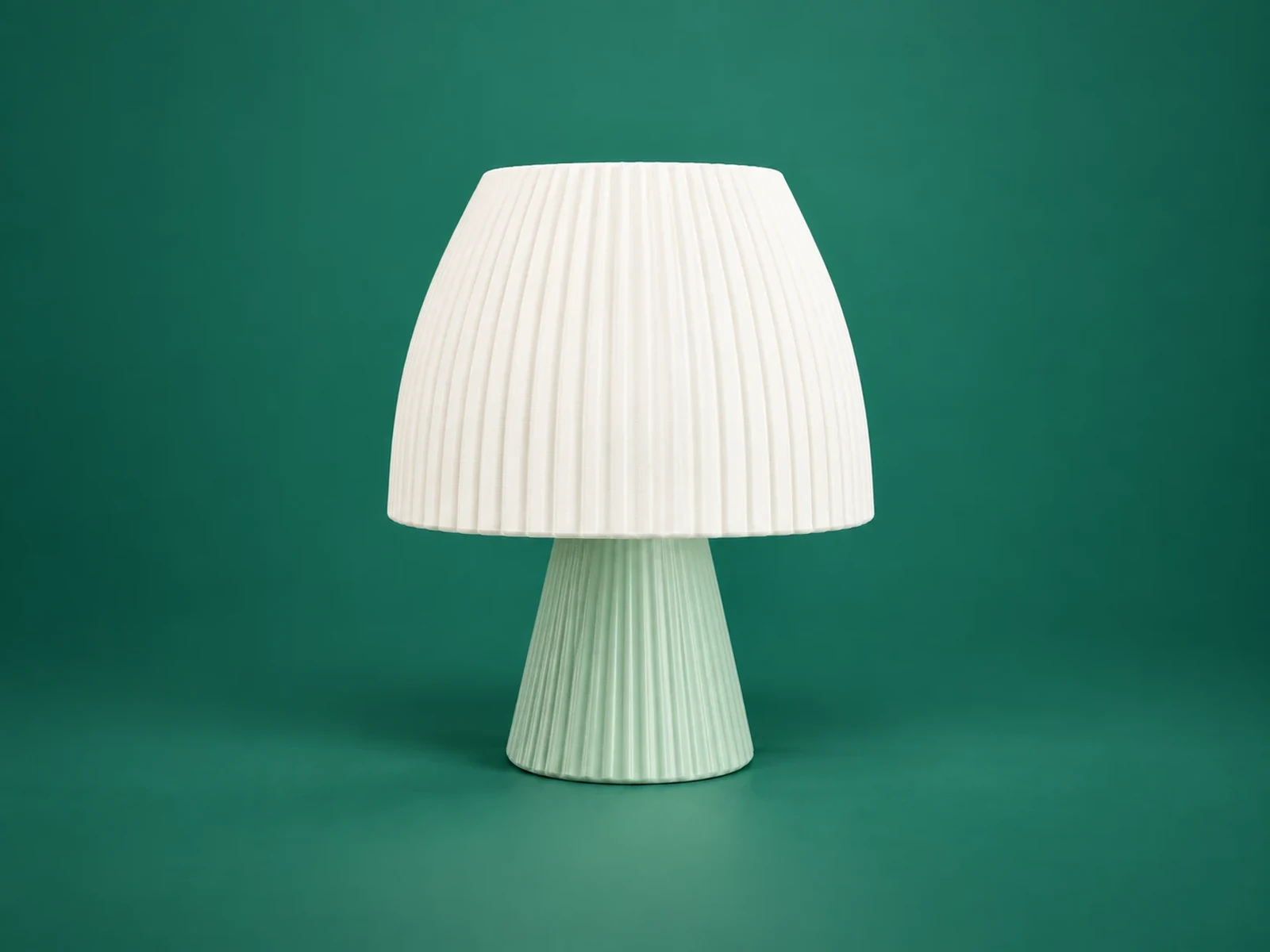
Use an LED bulb
LED bulbs run much cooler than incandescent or halogen bulbs. Use an LED bulb with a low wattage. Never fit an incandescent or halogen bulb in a printed lamp; they get hot enough to soften or ignite the plastic. Check the maximum bulb wattage of the lampholder, and choose a lower one for printed shades.
| Bulb type | Heat | Use in a printed shade? |
|---|---|---|
| LED | Low; most of the energy becomes light | Yes, a low-wattage bulb |
| Compact fluorescent | Moderate | Not recommended |
| Incandescent | High | No |
| Halogen | Very high | Never |
Use a certified lampholder
- Buy an E14 or E27 lampholder that carries a recognised safety mark for your country.
- Choose a holder with a switch or a cord set that is already assembled, certified and fitted with a plug.
- Do not use damaged, unmarked or modified parts.
Choose heat-resistant material
PLA softens at fairly low temperatures; PETG is better; materials such as ASA or ABS resist more heat. The material matters most close to the bulb. A bulb that does not touch the plastic and an LED bulb that stays cool both give a big safety margin. Still, check the lamp after the first hours of use: if the plastic near the holder feels hot, stop and change the setup.
Keep the plastic away from the bulb
Leave a gap between the bulb and the shade all round, and between the lampholder and the plastic of the base wherever the holder warms up. Use the cutaway view in Lamp Studio to check the clearance, and hold your actual bulb against the screen. A wider shade, a smaller bulb or a taller base all give more room.
Ventilation
Heat has to go somewhere. A shade that is open at the top and bottom lets warm air rise and escape. Do not cover the lamp with cloth, paper or anything that traps heat, and do not use it in a sealed cabinet.
Strain relief for the cable
The cable must not be able to pull on the connections inside the holder. The base has a cable arch; route the cable through it, tie a knot or use a strain-relief clamp so that a tug on the cable does not load the terminals. A cable that is loose or pinched against a sharp edge can fail.
Who should do the wiring
Connecting a lampholder to the mains is a job for a qualified person. If you are not trained, use a ready-made lamp cord set with a certified holder and plug that only needs to be fitted into the base, and do not open it. Do not use extension leads that are not rated for the load.
Stability
Check that the lamp does not tip over. A light base and a tall, heavy shade make a lamp unstable. Add weight to the base, or widen it, and test with a gentle push. A lamp that falls over can break the bulb and expose live parts.
Before you plug it in
- LED bulb, low wattage.
- Certified lampholder and cord.
- Cable under strain relief, not touching sharp edges.
- Material suitable for the heat.
- Lamp is stable and ventilated.
- Wiring has been done or checked by a qualified person.
The first hours of use
- Switch the lamp on with someone at home and nothing flammable nearby.
- After 15 minutes, switch it off and feel the plastic near the bulb and the holder. It should be warm at most.
- Repeat after an hour of use. If anything is hot, discoloured or smells, stop.
- Keep an eye on it for the first few days.
If something smells or looks wrong
If the plastic discolours, smells hot or deforms, unplug the lamp. Do not use it again until you have found the cause: a bulb that is too powerful, poor ventilation or a damaged holder.
When not to print a lamp
- If you will leave it on unattended for long periods in a place where a fire would be dangerous, buy a certified lamp.
- If it will be near children or pets who might pull it over.
- If you cannot get a certified holder or have the wiring checked.
Questions people ask
Can I use a regular bulb?
Use an LED bulb. Incandescent and halogen bulbs get too hot for plastic shades.
Is PLA safe for a lamp shade?
PLA can be used with a cool LED bulb that does not touch the plastic, but PETG or a heat-resistant material gives more margin. Check the lamp after the first hours of use.
Do I need an electrician?
Mains wiring should be done by a qualified person. If you are not, use a ready-made certified cord set.
How hot is too hot?
If you cannot comfortably keep your hand on the plastic near the bulb, it is too hot for a printed shade. Switch it off and change the bulb, the shade or the setup.
Keep reading
How to Design a 3D-Printed Lamp Shade That Glows WellWall thickness, shape, lampholder opening and base: how to design a printable table lamp shade with Lamp Studio and what to print first. 3D Print Settings for Neon Sign Channels: Material, Walls and FitStarting settings for printing LED neon sign channels: filament choice, layer height, walls, infill, orientation, brims and how to tune the fit of the strip and the dovetails.Calibrate Your Printer for Tight Fits: Strips, Joints and LampholdersHow to measure and fix dimensional accuracy so printed slots, dovetails, joints and lampholder bores fit: calibration prints, flow, first layer, horizontal expansion and clearance.
Written and checked by the Volucore team against the behaviour of our tools. Spotted a mistake or something out of date? Tell us and we will fix it.